New Call-to-action
  • Why MFS?
  • Coaches
    • Greg Monaco - Owner
    • Jinny Baker - KXT
    • Derek Shepard - GXT
  • Programs
    • Business Partnerships
    • Boot Camp
    • GXT
    • KXT
    • Student Athlete
  • Schedule
  • Members
    • 2016 MFS Challenge
  • Start Up
    • Initial Steps
    • Pricing
    • FAQ
    • Contact Us
  • Workout of The Day
  • BootCamp

Lindsay Bettencourt

Recent Posts

"Break the Fast" with Breakfast!

Posted by Lindsay Bettencourt on Mar 6, 2015 10:59:55 AM

  • Tweet

Breakfast is such an underrated meal; it is by far the most important meal of the day. If you’re looking to lose weight, enhance your performance, or just eat healthier you have to focus on what you put into your body. Your metabolism is still turned on while you’re sleeping, metabolic processes are still running. This means you are still breaking down tissue & using ATP (cellular energy) even when you are doing NOTHING. When you wake up, eating breakfast within an hour is ideal - you need to replenish what your body has used overnight. You have been fasting for around 8 hours, don’t skimp at breakfast. A well balanced breakfast between 400-600 calories is perfect, unless you’re planning to workout first thing in the morning, then you would want to eat a little lighter. There are a million reasons why breakfast is the most important meal but here are a few to take home…

  • A carbohydrate & protein rich breakfast will help curb cravings later in the day & help keep your body energized throughout the day so you won’t feel the need to snack on whatever is in sight
  • Breakfast will replenish glycogen stores your body depleted over night, so you don’t start to break down lean body mass for fuel
  • It’s a perfect time to load up on essential nutrients your body needs - calcium, iron, vitamin B, & fiber
  • It’s been shown to help people stay focused & make healthier choices throughout the day; not only when it comes to food but exercise & in the work environment as well
  • You will be able to work out harder when your body is fueled properly as opposed to “running on fumes”
  • If you train early, it’s better to get a low calorie (150-200) carb-rich “pre-workout snack” when you wake up & follow your workout with a larger well balanced breakfast to refuel
  • If you train later in the day it is more important to get a hearty breakfast to fuel your morning & a “pre-workout snack” is important 30-90 minutes before your work out
  • Focus on what works for you. Busy?...Prep at night so you can take it to go. Don’t love cooking?... Hearty cereal & a banana. Not hungry first thing?...Liquid breakfast - make a smoothie full of fruit, veggies, & a little protein

As you can see I could go on and on about how important breakfast is but hopefully this illustrates the point. If you think about it, breakfast means “break the fast”, you have been fasting for 8 hours & we all know that is not a great thing to put your body through. It has been shown that people who don’t skip breakfast weigh less, make healthier choices, & have more energy throughout the day. Do yourself a favor & start the day out right so the rest of your choices throughout the day follow.
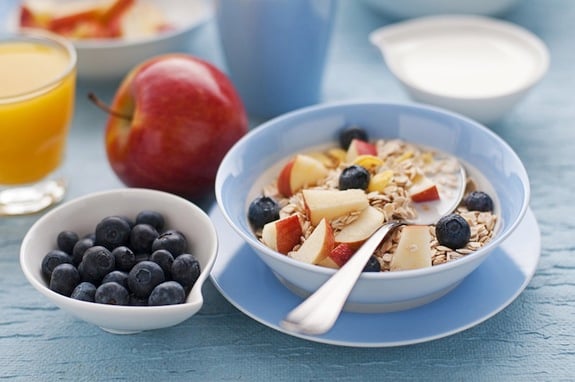
healthy-breakfast-130912

0 Comments Click here to read/write comments

Topics: Nutrition Tips

Post-workout Nutrition

Posted by Lindsay Bettencourt on Feb 27, 2015 5:15:00 PM

  • Tweet

Many of us are aware that post workout refueling is important to optimize recovery but understanding   when, how much, & what you should put into your body post- workout will allow you to take smarter action towards refueling & recovering. Let’s start with why it’s even important to worry about recovery & why getting it right could change the results of your workout drastically.

WHY TO RECOVER:

When you complete a high intensity strength or metabolic workout you’re depleting your glycogen stores (usable source of energy for the muscle), &  using all your stored fuel. Carbohydrates are the main source of fuel during these anaerobic workouts & if you don’t have an adequate supply you’re body is going to start breaking down protein (muscle)…BAD! That is extremely counterproductive no matter what your goals are - weight loss or mass building. Muscle burns fat...so we need muscle! That is why pre workout fueling is important. Refueling post workout allows us to replenish those used up glycogen stores so our body doesn’t catabolize, or breakdown the muscle that we worked so hard to build up. The window doesn’t close at 30 minutes post workout, but you DO want to try to fuel your body within 30-60 minutes post workout.

HOW TO RECOVER:

First let’s get this out of the way - carbs are not the enemy here...it's just the opposite. Post workout is the only time “bad” carbs are ok to eat. We need to get the nutrients into the cells as quickly as possible so the simple/high-glycemic index carbs are your friend. These carbohydrates are quickly digested & signal an insulin spike in our blood which facilitates rapid absorption of nutrients into your cells. A good general rule to follow is 0.25-0.4 grams of carbohydrates per pound of body weight (target body weight). FYI fruit is not the best type of carbohydrate to have post workout since it is made up of fructose which needs to be converted by the liver to glucose, its takes a little long to digest & absorb. Don’t forget to hydrate either! Your body is made up of mostly water; common sense should tell you you need to drink it, a lot of it. Weigh yourself before your workout & then again after, for every pound lost you should be consuming 20-24 ounces of fluids.

WHEN TO RECOVER:

Protein is clearly important, we know protein builds muscle, aids in recovery, & is what everyone thinks is the end all be all of post workout refueling. To be honest immediately following your workout you want to focus on carbs & replenishing the glycogen stores. Protein should be second on your list (but definitely on it), getting a high protein meal a few hours post workout is what you really want to focus on making sure you accomplish. Within that 30-60 minute window aiming for 0.15-0.25 grams of protein per pound of body weight (target body weight) is ideal. Protein in liquid form is great because it will be digested & be absorbed quickest in your digestive tract, so a protein shake is easy & effective.

You cannot perform optimally without adequate nutrition. You will not have the energy level, your body will not recover fast enough, & you won’t ultimately see the results you want unless you realize how important it is to fuel your body properly pre workout, post workout, & really the rest of the day. My favorite post workout quick & easy snack is low fat chocolate milk or a quick simple protein shake. Trust me you need to make it a priority to refuel properly, it will make a world of difference in your training!

chocolate-milk-as-a-post-workout-drink_1

0 Comments Click here to read/write comments

Topics: Nutrition Tips

Fuel Your Workout Right

Posted by Lindsay Bettencourt on Feb 13, 2015 2:07:26 PM

  • Tweet

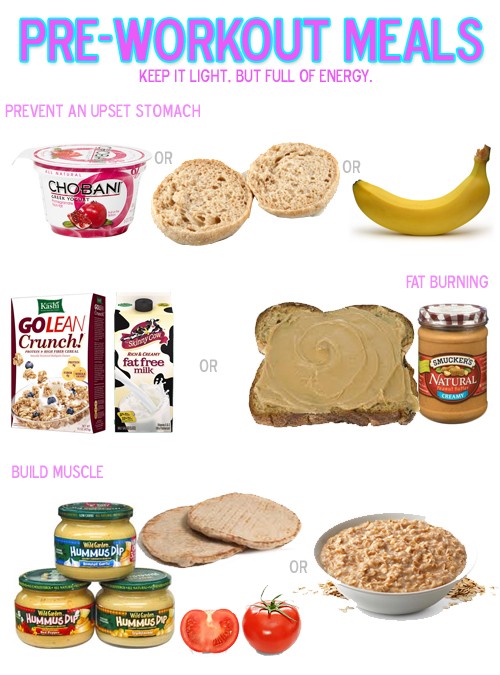
We all have questions about what, when, and how much to eat before a workout. Fueling your body properly is what will allow you to train at your optimal level. Let's start with what to eat before you workout. If you're planning on a pretty intense hour long workout a good mix of mostly complex and simple carbohydrates, a moderate amount of protein, and little fat is ideal in terms of a pre-workout snack. The carbohydrates will ensure a steady flow of energy, the protein will aid in tissue building/repair and recovery, and the reason for little fat is because it is harder to digest then absorb and trust me that's not a fun thing to deal with during an intense workout. Always, always hydrate before and after a workout, at least 30 minutes before.   Another tip to keep in mind is that foods high in fiber are harder to digest, so try and stay away from those when choosing a pre-workout snack.

Examples of good pre-workout snacks

  • Whole wheat toast with a small amount of peanut butter
  • Greek yogurt (plain) with granola and blueberries
  • Smoothies made with Greek yogurt, fruit, and low fat/skim or almond/soy milk
  • Plain oatmeal and fruit
  • Apple slices with almond butter
  • If in a hurry grab a granola bar low in sugar with the least amount of ingredients you can find

 When should you have that pre-workout snack? 30-90 minutes is a good general rule to follow for an hour long workout. Everyone's body is a little bit different so you will have to experiment and find what works best for you. Another factor to keep in mind is the time of day you are working out, morning or night. If you are working out after breakfast keep that in mind when choosing your meal, that might not be the day to have the Sunday buffet spread. If you are a night person try to save dinner for after and load up on protein but get that carbohydrate rich snack in before your workout.

Ever feel light headed or nauseous during a workout? This could be due to either not eating enough before your workout or eating too much. When you eat a huge fatty, greasy meal you feel gross right? Now try going to work out after that, I think not. Your body is using all its energy to digest that Thanksgiving size meal, if you start jumping around it may not want to stay down...you get the picture. On the other hand if you haven't eaten enough your muscle glycogen stores are depleted and your blood sugar may be low. Your body is screaming for some carbohydrates to utilize quickly.  When deciding how much to eat 150-250 calories is a good general guide for an hour long workout, everyone is a little different.  

Nutrition is not separate from training and training is not separate from nutrition. These two sciences go hand in hand. To train at the highest level your body is capable of you NEED proper nutrition throughout the day and especially before and after your workouts. For your body to build lean muscle and recover you need high quality protein, for your body to be able to expend the amount of energy needed during those intense workouts you need good complex carbohydrates, and for you to feel good while training you need good nutrition... bottom line!

best-pre-workout-foods

0 Comments Click here to read/write comments

Topics: Nutrition Tips

Heart Healthy Nutrition Tips

Posted by Lindsay Bettencourt on Feb 6, 2015 5:29:00 PM

  • Tweet


Happy Heart Month!!

Did you know heart disease is the leading cause of death in men and women in the United States? Primary prevention is the answer to this problem. There are many steps you can take to avoid cardiac risk factors. Exercising on a regular basis, eating healthier, and quitting smoking (that should go without saying!) are three huge things you can do starting now.


Ok, so eating healthier... You might be thinking "I know Lindsay, everyone says that but what do you mean exactly?" You want specifics right? Let's start with fiber - increasing your intake of dietary fiber is huge, especially soluble fiber. You can find soluble fiber in whole foods like citrus fruits, apples, oats, flaxseeds, beans, and other whole grains. Fiber has been found to decrease cholesterol and blood sugar levels. The way it decreases cholesterol is by decreasing the level of your "bad" cholesterol carriers; the LDLs (Low Density Lipoprotein). Fiber has also been found to lower blood pressure and help your body maintain a healthy weight by increasing satiety (feeling full) after meals rich in fiber. Men younger than 50 should get at least 38 grams of dietary fiber while those over 50 should aim for at least 30 grams. Women younger than 50 should get at least 25 grams, and those over 50 at least 21 grams. Dietary fiber should come from a variety of sources rich in fiber including vegetables, fruits, whole grains, and legumes.
There are a few more dietary habits you can adopt that will be beneficial in preventing not only heart disease, but many other health related issues. Decreasing sodium intake is another thing you probably hear all the time. Ideally you want your sodium intake below 1,500 mg, decreasing the amount of processed foods you eat will help dramatically. Increasing your intake of omega 3 fatty acids by consuming fish high in omega 3 fatty acids (salmon, trout, herring) 2-3 times per week has been shown to be beneficial to heart health. Decreasing saturated fat and added sugar while switching to low fat or fat free dairy products are important dietary changes to make as well!


An easy way to do all of this is to make an effort to only eat whole foods rich in nutrients. Vitamins and minerals are super important to help our bodies run efficiently and whole foods are the best way to get them. Keep your body healthy by fueling your body right and getting yourself in the gym, the rest usually takes care of itself!

If you're interested in a little more depth, here's a good read on whole grains and fiber!
http://www.heart.org/HEARTORG/GettingHealthy/NutritionCenter/HealthyDietGoals/Whole-Grains-and-Fiber_UCM_303249_Article.jsp#mainContent
Heart_Health_Month
0 Comments Click here to read/write comments

Topics: Nutrition Tips

MFS Nutrition

Posted by Lindsay Bettencourt on Jan 31, 2015 3:16:00 PM

  • Tweet

 Healthy Superbowl Snacking!

  • Super Bowl = Cheat Day? ... Not necessary!

    Cheat days are unnecessary because "diets" are unnecessary, but that's a different topic for a different day.

    So, there's a football game this Sunday right? Ha! Only the biggest one since February 5,2012 for us New Englanders (Pats last Super Bowl appearance)! You're worried about how you shouldn't eat or drink anything "bad" right? Might as well stay home, eat chicken and broccoli, restrict yourself, feel like you're in prison so you don't screw up your diet (ok, slight exaggeration here but you get the point)? No...wrong! Inevitably, yes, there is going to be food, lots of food, and drinks but you can still have fun, snack, have a few beverages, and not feel like you need to lock yourself in the gym for the following week.

    Super Bowl Sunday is the second biggest "food" day of the year. Thanksgiving taking the cake on that one. I heard on Conan the other night that Americans will consume 1.2 BILLION buffalo wings on Sunday night, seriously!? When you think of the spread of food what comes to mind? Nachos, pizza, wings, cheesy dips and chips, meatball subs, beer, beer, and more beer right? Question, why do we think that just because that's what we normally consume on this day that we have to limit ourselves to those greasy, fatty snacks? You could be adding 3,000 calories to your daily intake in only a few hours.

    There are a million modifications and substitutions you can make to your favorite snacks that might even make them taste better than the originals. Above that, you can shave half the calories and fat off pretty easily. Let's take those buffalo wings I was talking about earlier, you know those fried, sauce covered wings you love to smother with blue cheese dressing? How about a little substitution, some homemade Chicken Yakitori!? Sounds complex doesn't it?...it's not I promise. All you need is some lean chicken breast, veggies, and a broiler.


chickenyakitori_11599_16x9

Ingredients-

4 lean skinless chicken breasts

1 green pepper

1 red pepper

1 yellow pepper

1 Spanish onion

1/4 cup low sodium soy sauce

2 tbsp vegetable oil

1 tsp minced fresh ginger

1 tsp sugar

1 garlic clove minced

Directions-

-Slice chicken, peppers, and onion in 1x1 inch cubes.

-In a shallow pan combine these with soy sauce, vegetable oil, ginger, sugar, and garlic. Let this sit in the fridge for 1 hour.

-Place the chicken, peppers, and onion onto the skewers.

-Preheat the broiler and place rack in shallow baking pan.

-Broil for 4 to 5 minutes on each side (or until chicken tender).

-Now ENJOY!

*  Serves 4, double or triple as needed.


Look at that, you're getting your protein and veggies in without all that saturated fat and messy fingers!

Stay tuned for additional ways to "healthify" your superbowl snacks!!


0 Comments Click here to read/write comments

Topics: Nutrition Tips, diet

Previous All posts

Recent Posts

Posts by Topic

  • Nutrition Tips (9)
  • fitness (8)
  • MFS Training (5)
  • workouts (5)
  • Strength Training (4)
  • Training (4)
  • healthy diet (3)
  • healthy eating (3)
  • motivation (3)
  • Nutrition (2)
  • bodyweight exercises (2)
  • diet (2)
  • interval workouts (2)
  • product review (2)
  • Fitness Deals (1)
  • Fitness Programs (1)
  • Gym Memberships (1)
  • PNF (1)
  • Success Stories (1)
  • Training Cycle (1)
  • biometrics (1)
  • core (1)
  • exercise (1)
  • fitness innovation (1)
  • fitness technology (1)
  • fitness tracking (1)
  • foam rolling (1)
  • gut (1)
  • healthy dining options (1)
  • healthy thai food takeout (1)
  • kickboxing (1)
  • mental health (1)
  • microbes (1)
  • modalities (1)
  • performance goals (1)
  • performance parameters (1)
  • range of motion (1)
  • relaxation (1)
  • sport specific (1)
  • static stretching (1)
  • strength (1)
  • stretching (1)
  • strike (1)
  • technique (1)
  • training device (1)
  • yoga (1)
  • yoga mat review (1)
see all

Subscribe to Email Updates

Why MFS | Our Coaches | Programs | Schedule | Members | Start Up
 
 781-985-0402 | Info@MobileFitnessSystems.com | 89 Pearl Street Braintree MA 02184